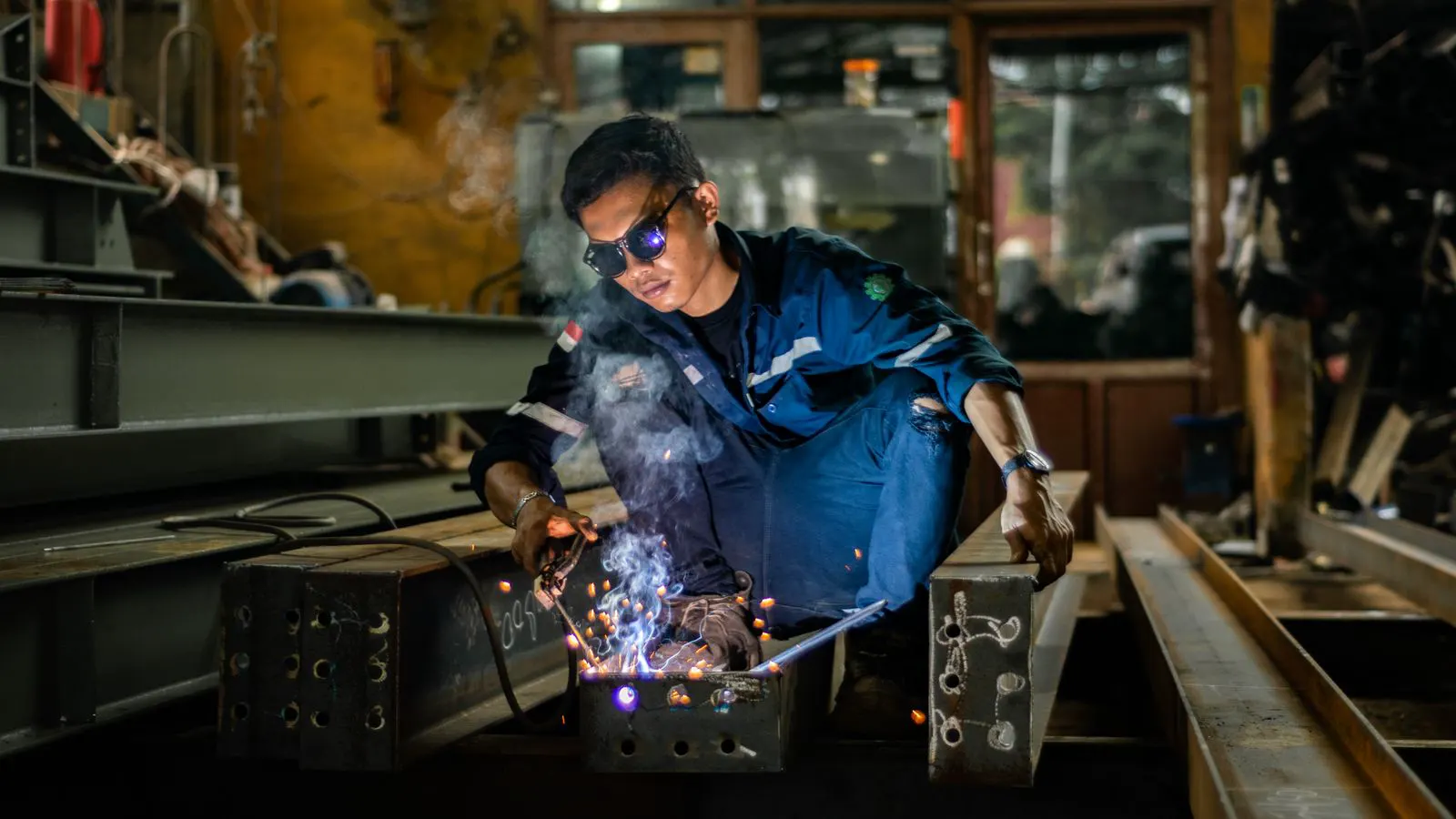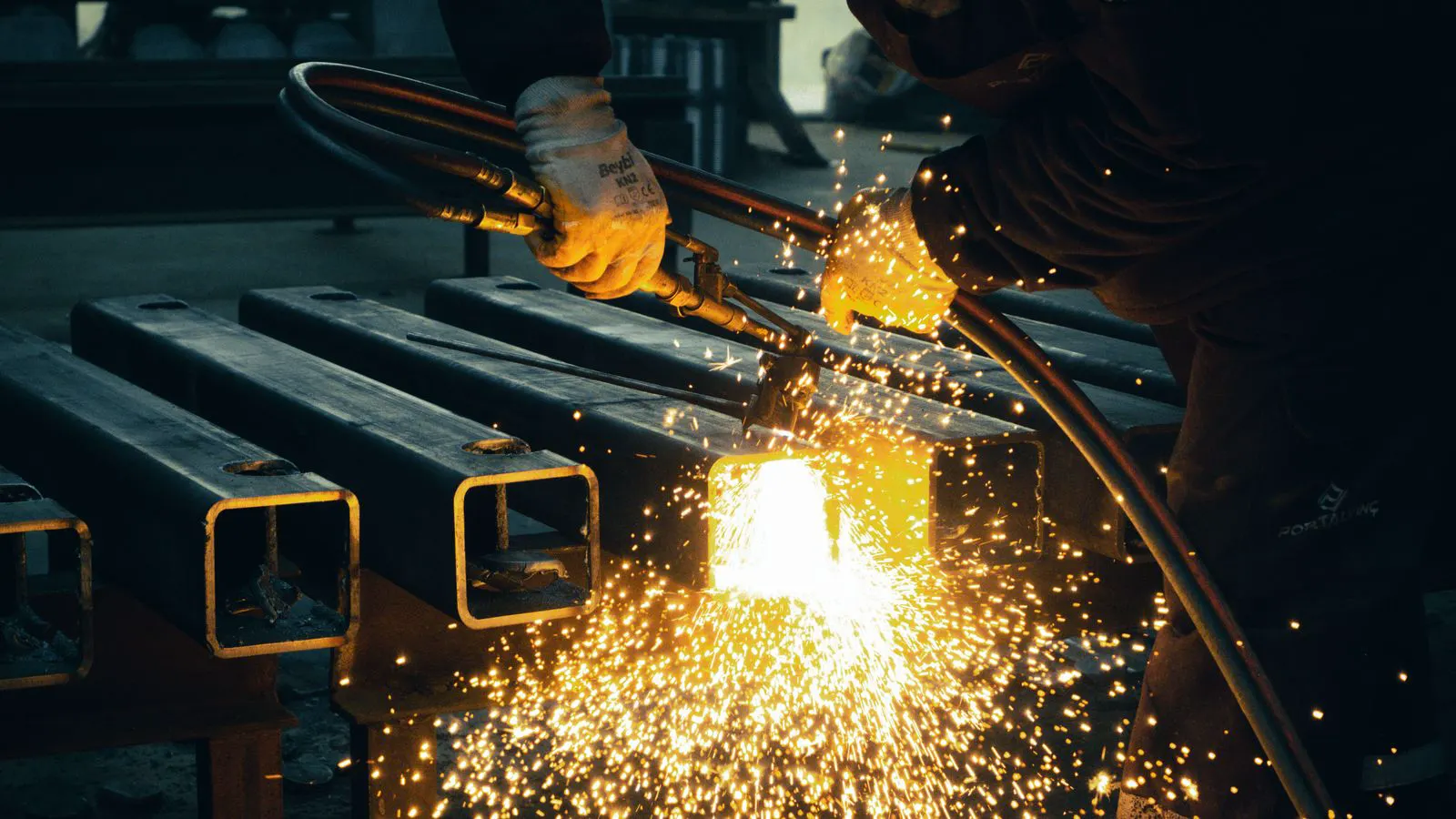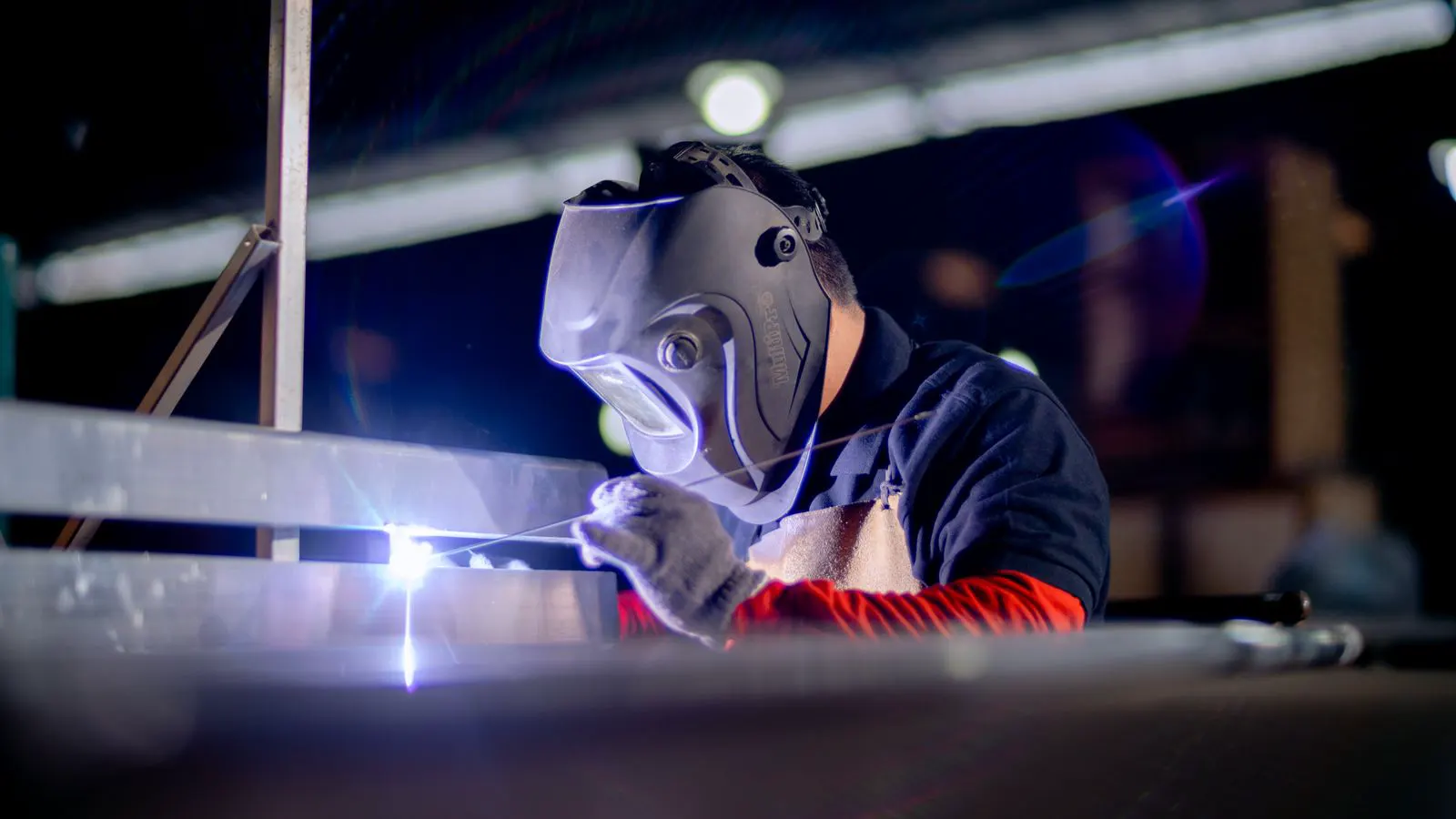
Choose TIG for thin sheet metal when precision, low heat input, and clean appearance matter. Select MIG when production speed, thicker sections, or higher deposition rates are the priority. The decision depends on material thickness, joint geometry, and distortion tolerance.
- TIG welding offers lower heat input, which helps prevent burn-through and distortion in thin sheet metal.
- MIG welding works faster and is more forgiving for production work, but it generates more heat and spatter.
- For thin sections, joint design and travel speed matter more than the process alone.
- Stainless and aluminum thin sheets often favor TIG due to contamination control and color matching.
- Use MIG when speed and deposit rate are needed and minor surface cleanup is acceptable.
What thickness changes about MIG vs TIG welding
The first decision point is sheet thickness. Most fabricators treat 0.5mm to 1.5mm as the zone where TIG starts to win on control. Below that, heat management becomes the main constraint. A small puddle and precise filler placement matter more than wire feed speed.
MIG welding is easier to run at higher amperages. That helps when the sheet is thicker or when you are stacking multiple passes. For thin sheet, MIG can still work, but the operator needs a low-setting gun, a fast travel speed, and a careful eye on the root face.
The second decision point is what the part will do. A decorative panel, a sealed enclosure, or a structural bracket each have different tolerances. If the part must stay flat, TIG is often the safer bet. If the part is a production bracket where speed drives cost, MIG may be the better fit.
How heat input affects thin sheets
Heat input is the main enemy of thin sheet metal. It causes burn-through, warping, and discoloration. TIG lets the operator control heat more precisely because the arc is stable and the filler is placed by hand. MIG pushes a continuous wire feed, which creates more heat and more material at the joint.
For thin stainless steel, discoloration is a visible problem. A TIG weld can be kept clean, and any heat tint can be managed. A MIG weld on thin stainless often leaves spatter and a rougher surface. Cleaning that area takes time, and the heat tint may be harder to remove without affecting the finish.
Aluminum adds another layer. Thin aluminum sheets need a clean joint and a stable arc. TIG handles aluminum well because the operator can control the arc and the filler. MIG can work, but it tends to produce more porosity if the joint is not perfectly clean.
When to choose TIG for thin sheet metal
Pick TIG when the part needs a clean, consistent weld. This applies to visible panels, food contact parts, and sealed enclosures. The weld must look uniform, and the operator must be able to maintain a small puddle.
TIG is also the right choice when the joint is tight. A narrow root face and a small gap reduce the risk of burn-through. The operator can keep the arc on the joint and add filler only where needed.
For stainless steel, TIG is often the default for thin sheet. The welder can use a low amperage, a small tungsten, and a controlled travel speed. The result is a smooth bead with minimal heat tint. This matters when the part is not going to be painted over.
For aluminum, TIG gives better control over porosity. The operator can clean the joint, use a clean arc, and add filler slowly. The result is a stronger weld with fewer surface defects.
When to choose MIG for thin sheet metal
Pick MIG when speed is the priority. MIG welds faster because the wire feeds continuously and the arc is more forgiving. For production work, this can make a big difference.
MIG is also useful when the sheet is at the thicker end of the thin range. If the part is 1.5mm to 2.5mm, MIG can handle it with less operator skill than TIG. The wire feed helps maintain a steady puddle, and the operator can move faster.
For carbon steel, MIG is often the go-to for thin sheet. The process is fast, and the welder does not need to match filler by hand. The spatter can be cleaned off, and the weld is strong enough for most structural uses.
MIG can also be used with gasless or flux-core wire in some production setups. This removes the need for a gas cylinder, but it increases spatter and reduces finish quality. For thin sheet, this is usually not ideal unless the part is not visible.
Quick comparison table
| Option | Best for | Limitations |
|---|---|---|
| TIG | Thin sheet, clean finish, stainless, aluminum | Slower, requires higher operator skill, more setup time |
| MIG | Production speed, thicker thin sheet, carbon steel | More heat, spatter, less control on very thin sections |
| Low-amperage MIG | Thin carbon steel, high volume | Still more heat than TIG, spatter cleanup needed |
| Short-arc TIG | Precision work, tight joints | Not practical for long production runs |
| Hybrid TIG/MIG | Mixed production lines | Requires two setups, more training |
How joint design affects the choice
The joint design can change the decision as much as the process. A butt joint on thin sheet is easier to weld than a lap joint. The butt joint has a smaller heat zone and less risk of distortion.
A V-groove or beveled joint on thin sheet is usually not needed. The joint is too small to require a bevel. A simple butt joint with a small gap works well.
A lap joint on thin sheet can cause burn-through if the operator pushes too much heat. TIG is better here because the operator can control the arc and keep the heat away from the overlap edge. MIG can work, but it needs a low setting and a careful travel speed.
A fillet weld on thin sheet is also a heat problem. The operator must keep the arc close to the joint and avoid melting the base metal. TIG gives better control for this type of joint.
Practical checks before you weld
Before starting, check the fit-up. The gap should be small and even. A large gap on thin sheet is a burn-through risk. The edges should be clean and free of paint, oil, or rust.
Check the material thickness. If the sheet is below 1mm, plan on TIG or a very low MIG setting. If the sheet is 1.5mm or more, MIG becomes more practical.
Check the joint length. Long joints need more control. TIG is better for long, straight joints because the operator can maintain a steady arc. MIG is better for short joints or repetitive production work.
Check the distortion tolerance. If the part must stay flat, TIG is usually the safer choice. If the part can be stress relieved or corrected, MIG may be acceptable.
A simple decision path
Start with the sheet thickness. If it is below 1mm, lean toward TIG. If it is 1.5mm or more, MIG becomes a strong option.
Next, check the material. Stainless and aluminum often favor TIG for clean finish and contamination control. Carbon steel is more forgiving and works well with MIG.
Then, check the joint. Tight joints and fillet welds favor TIG. Butt joints and production work favor MIG.
Finally, check the production rate. If you are welding one part per hour, TIG is fine. If you are welding ten parts per hour, MIG may be the only option.
Common mistakes to avoid
Do not run MIG at too high an amperage on thin sheet. The puddle becomes too large, and the sheet burns through. Lower the amperage and increase the travel speed.
Do not ignore the joint gap. A large gap on thin sheet is a heat trap. Keep the gap small and even.
Do not skip the surface prep. Paint, oil, and rust cause porosity and weak welds. Clean the joint before welding.
Do not use TIG for long production runs without planning. It is slower, and the operator gets tired. For high volume, MIG or a hybrid setup may be better.
Do not ignore distortion. Thin sheet warps easily. Use fixtures, tack welds, and a balanced weld sequence.
Final thoughts
MIG and TIG each have a clear place in thin sheet fabrication. TIG wins on control, finish, and low heat input. MIG wins on speed, ease of use, and production volume.
The best choice is not about which process is “better.” It is about matching the process to the part. A clean stainless panel needs TIG. A production carbon steel bracket needs MIG.
When you are unsure, test a scrap piece first. Weld a joint, check the penetration, measure the distortion, and inspect the finish. That test will tell you more than any general rule.
Frequently asked questions
Can MIG welding be used on thin sheet metal?
Yes, MIG welding can be used on thin sheet metal, but it requires low amperage and a fast travel speed. It is more prone to burn-through and spatter than TIG on very thin sections.
Is TIG welding faster than MIG welding?
No, TIG welding is generally slower than MIG welding. MIG has a higher deposition rate and is better for production work. TIG is slower but gives more control.
Which process is better for stainless steel thin sheet?
TIG is usually better for stainless steel thin sheet because it produces a cleaner weld with less heat tint. MIG can work, but it leaves more spatter and discoloration.
Can I use MIG on aluminum thin sheet?
Yes, MIG can be used on aluminum thin sheet, but it requires a clean joint and a low setting. TIG is often preferred for aluminum thin sheet because it gives better control over porosity.
What is the minimum sheet thickness for MIG welding?
There is no fixed minimum, but thin sheet below 1mm is challenging for MIG. It requires low amperage and careful technique. TIG is more forgiving on very thin sections.