Adding surface treatments changes both budget and delivery dates. This guide shows how coating processes, material, thickness, and surface prep drive price and schedule, and how to write an RFQ that gets comparable quotes.
- Coating cost is driven by process type, surface area, material, thickness, and prep work, not just the coating name.
- Coating lead time depends on cleaning, curing, inspection, and whether the process runs in-house or is outsourced.
- A clear RFQ with part dimensions, material, finish spec, and quantity gets fair, comparable quotes from fabricators.
- Compare quotes by isolating coating cost from fabrication cost so you can see what actually drives the price.
- Ask about rework, touch-up, and inspection requirements before accepting a quote.
What drives sheet metal coating cost
The sheet metal coating cost is not a single line item in most real orders. It is made up of several parts: the coating process itself, the surface preparation, the material being coated, the part geometry, and the quantity. Two parts that look identical on a drawing can have very different coating costs if one requires more cleaning, has more edges, or uses a harder-to-coat material.
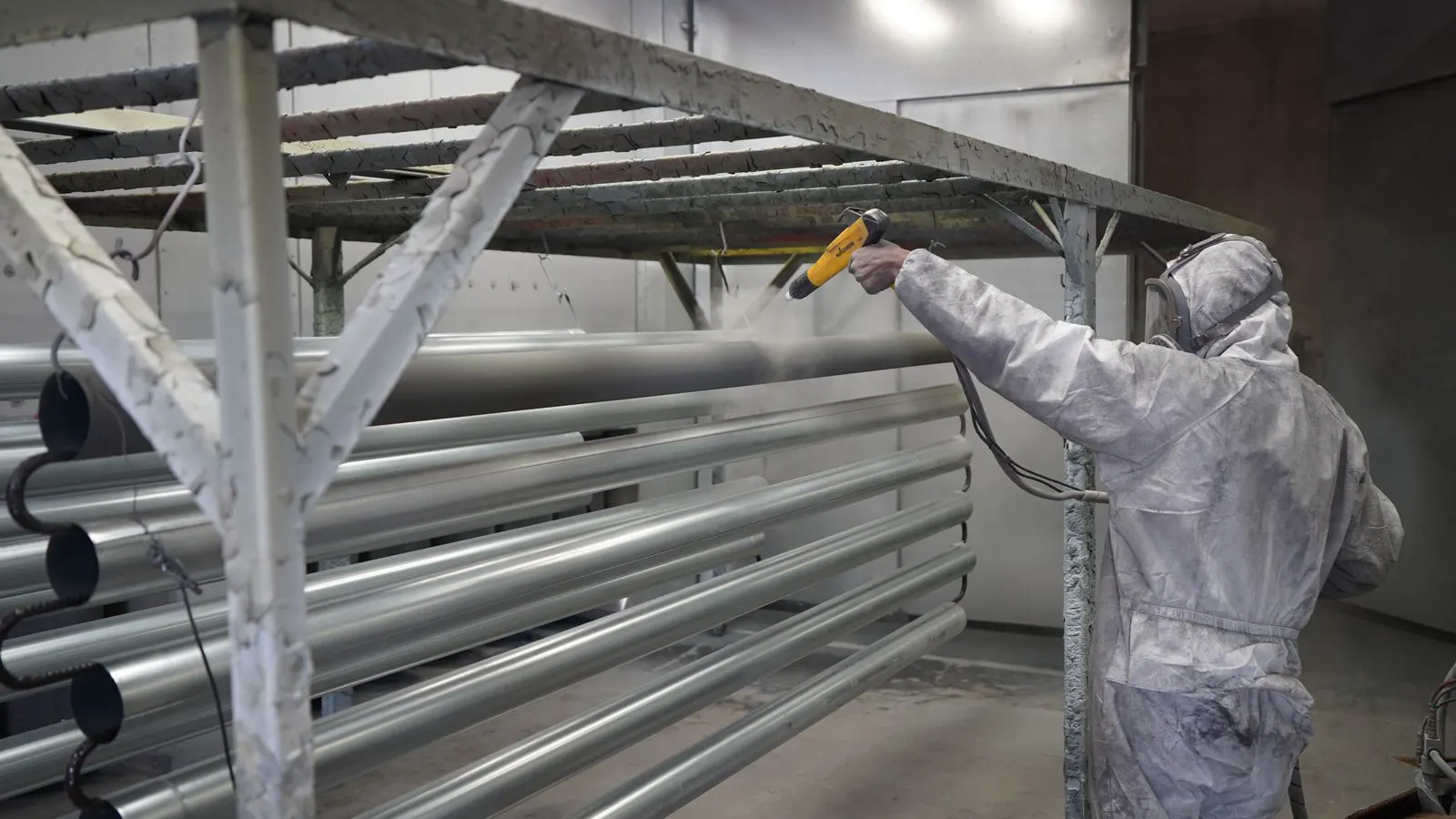
The process type is the biggest driver. Powder coating, plating, anodizing, and paint are all different in labor, equipment, and material use. Some processes use chemical baths that must be controlled carefully. Others use high heat. Some require multiple coats. The more steps, the more the price moves.
Part geometry matters more than people expect. A flat panel is easy to coat. A part with many small pockets, internal ribs, or tight corners may need extra attention to prevent drips, uneven thickness, or incomplete coverage. Fabricators may add manual work for these areas, and that labor shows up in the quote.
Material also changes the cost. Some materials take certain coatings better than others. A part made from one alloy may need a different prep step than a part made from another alloy. If the material is difficult to clean or requires special handling, the price goes up.
Quantity changes the unit cost. A small batch may carry a higher per-part charge because the setup and changeover time is spread over fewer pieces. A larger run usually lowers the per-unit coating cost, but only if the process can hold the schedule and quality.
How coating lead time affects the schedule
Coating lead time is often underestimated because buyers think of it as a single step at the end. In practice, it is part of the whole build sequence. The part must be fabricated, cleaned, and prepared before coating can begin. After coating, some processes need curing time, inspection, and packaging before the part is ready to ship.
The first delay usually comes from surface prep. If the part still has cutting burrs, weld spatter, or machining oil, it cannot be coated properly. The fabricator must clean it first, and that cleaning time is real time. If the part arrives with a finish that needs more work than expected, the schedule slips.
The second delay is the coating process itself. Some coatings are quick to apply but need time to cure. Others need multiple coats, each with its own drying period. If the plant is running multiple jobs, your part waits in the queue.
The third delay is inspection and rework. A coating that looks fine in one light may show a defect in another. Fabricators should inspect the finish, but if a rework cycle is needed, the part leaves the line, gets fixed, and goes back. That adds days, sometimes weeks, depending on the job.
Outsourced coating adds another layer. If the fabricator does not run the coating in-house, the part must be moved to another site, processed, and returned. That logistics step changes the lead time in ways that are not always visible in the quote.
How to write a clear RFQ for fair comparison
A vague RFQ produces vague quotes. If you ask for a “finished part” without specifying the coating, the fabricator has to make assumptions. Those assumptions become price differences, and you are not comparing apples to apples.
Start with the part itself. Include the material, thickness, and a clear drawing or 3D model. State the quantity. If the part is a batch, say whether the quantity is firm or flexible. If the part has multiple variants, list them separately.
Next, state the coating spec. Name the process. If you have a standard or a customer spec, reference it. If you only want a visual appearance, say so, but also describe the color, gloss, and thickness if you can. A simple sentence like “powder coating, RAL 9005, 80 microns minimum” is clearer than “dark gray finish.”
Also state the surface prep requirement. If the part must be cleaned to a certain standard, say so. If there are welds or edges that need special handling, mention them. If the part will be assembled with other parts, say whether the coating must stop at a certain line or cover a certain area.
Finally, state the schedule. Give the needed delivery date. If the date is firm, say so. If it is flexible, give a range. This helps the fabricator tell you whether the coating can be done in-house or must be outsourced, and what the realistic lead time is.
How to compare quotes fairly
When you receive multiple quotes, do not just look at the total price. Break the quote into fabrication and coating. If one supplier bundles them together, ask for a breakdown. If they will not, that is a signal.
Compare the coating line item against the process type, surface area, and quantity. If one quote is much higher, ask what extra work they are planning. It may be a fair difference if they see more prep or more inspection. It may be a bad quote if they are simply padding the number.
Check the lead time structure. Some quotes list a standard lead time and then add rush fees. Others build in extra time for the coating process. Ask what happens if the part needs rework. Ask what happens if the coating is outsourced. Ask what the inspection standard is.
Do not assume the cheapest quote is the best deal. A low coating price can hide a higher fabrication price, or it can mean the finish will not hold up in service. A slightly higher quote with a clear spec and a realistic schedule is often the safer choice.
Cost drivers at a glance
The table below lists the main factors that move sheet metal coating cost and lead time. Use it as a checklist when reviewing quotes or writing an RFQ.
| Cost Driver | What It Affects | Typical Question to Ask |
|---|---|---|
| Coating process | Base price and schedule | Is this in-house or outsourced? |
| Surface area and geometry | Labor and coverage | Are there pockets or edges that need extra work? |
| Material and thickness | Prep and compatibility | What prep is required for this material? |
| Quantity | Unit price and setup cost | Does the quantity change the unit cost? |
| Surface prep standard | Time before coating | What cleaning or degreasing is included? |
| Inspection and rework | Schedule risk | What is the inspection standard and rework policy? |
Practical mistakes to avoid
The most common mistake is treating coating as an afterthought. Buyers often send a drawing and say “please finish it.” That leaves the finish to the fabricator’s interpretation, and the interpretation shows up in the price or the delivery date.
Another mistake is not stating the quantity clearly. If you give a rough range, the fabricator may price for the low end or the high end. You may end up with a quote that does not match what you actually need.
A third mistake is not asking about the schedule. A part that is quoted at a reasonable price but has a long lead time may not fit your project. Ask for the lead time in writing, and ask what happens if the date moves.
A fourth mistake is not checking the finish after the first piece. If the coating is going to be used in a production run, ask for a sample or a first article inspection. If the finish is not right, you do not want to find out after the batch is done.
Finally, do not ignore the total cost of ownership. A cheaper coating may look fine in the shop, but if it chips, corrodes, or fails in service, the real cost is higher than the quote. The best finish is the one that fits the service conditions, the budget, and the schedule.
Frequently asked questions
What is the biggest factor in sheet metal coating cost?
The coating process and the surface preparation are usually the biggest drivers. A part with more prep work or a more complex finish will cost more than a simple flat panel with a basic coating.
How does coating lead time differ from fabrication lead time?
Coating lead time includes cleaning, application, curing, and inspection. It is separate from the cutting and forming time. If the coating is outsourced, logistics time is added too.
Can I compare quotes from different suppliers if they bundle fabrication and coating?
You can, but it is harder. Ask each supplier to break out the coating cost from the fabrication cost. If they will not, ask what work is included in the coating line item.
What should I put in the RFQ for a coating spec?
Name the process, the color or appearance, the minimum thickness if you know it, and any standard or customer spec. Also state the quantity and the surface prep requirement.
Does a higher coating price always mean a better finish?
Not always. A higher price may reflect more prep, more inspection, or a more durable process. It may also reflect a lower quantity or a complex geometry. Ask what the price includes before deciding.