Automated DfM tools now verify sheet metal CAD geometry against manufacturing constraints before files leave the design team. This shift moves cost avoidance from late-stage review to early model creation. Buyers should prepare by standardizing data, integrating checkers into workflows, and treating automation as a filter rather than a replacement for engineering judgment.
- Automated DfM checkers flag bend direction, tooling clearance, and nesting issues inside CAD software.
- Early verification catches geometry problems that manual review often misses during busy schedules.
- Standardized part naming and material libraries make automated checks more reliable.
- Engineers must review every automated flag because context still determines the final fix.
- Buyers should integrate automated checks into release gates rather than treating them as optional.
Why Automated Checks Are Moving Upstream
Sheet metal design has always depended on a human eye to spot a bend that fights the grain or a bracket that cannot nest. That manual review worked when part counts were low and shop floors ran small batches. Today, design teams release hundreds of assemblies each quarter. The volume makes spot checking unreliable.
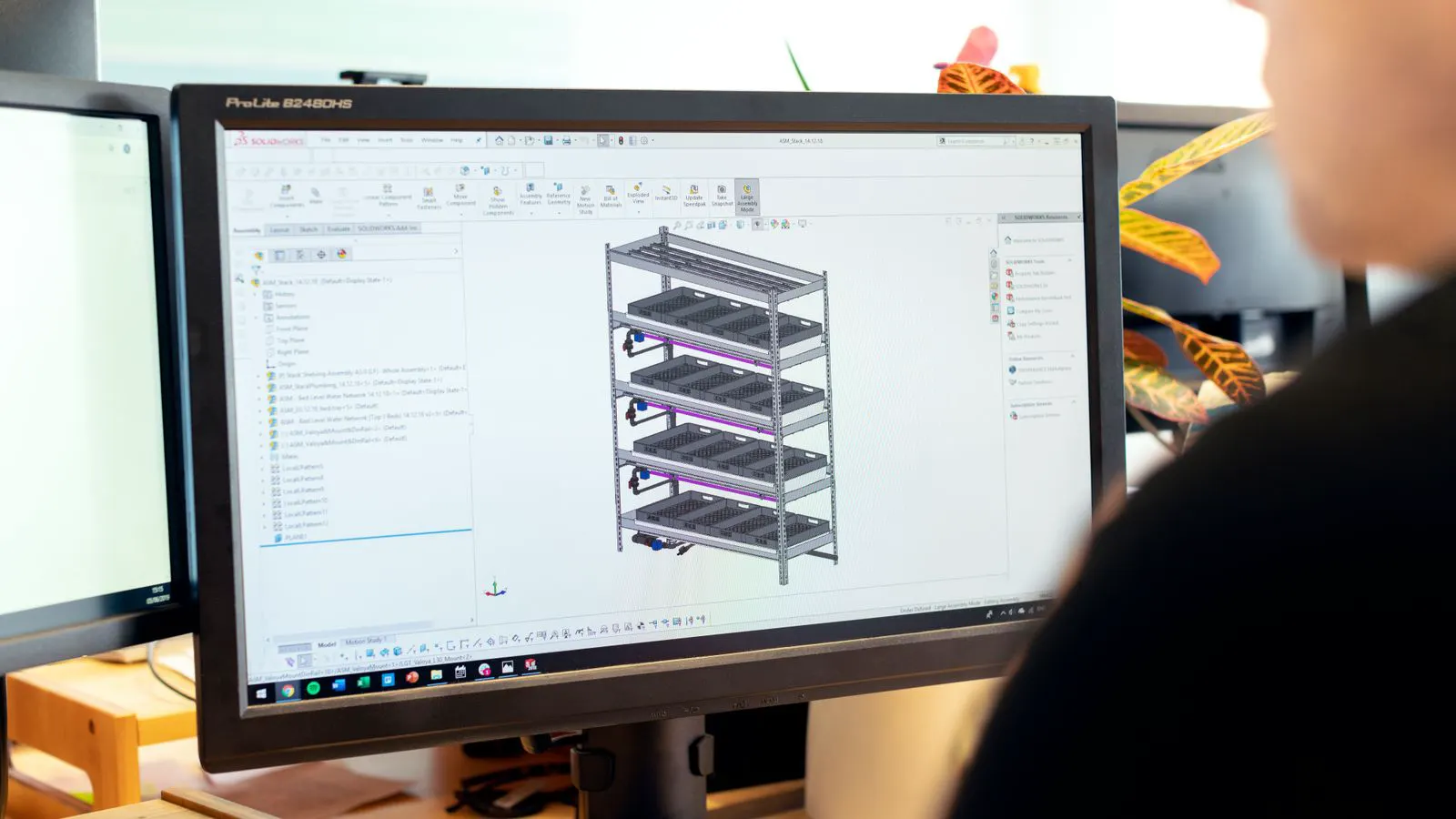
Automated DfM tools sit inside the CAD environment and run rule sets against the 3D model in real time. They check bend radius against tooling limits, verify material thickness against bend depth, and flag features that will force a second operation. The goal is not to replace the engineer. The goal is to move the cost of a fix from the fabrication floor back to the design station.
This shift changes what a buyer expects from a design supplier. The question is no longer whether a part is buildable. The question is whether the design data carries enough structure for a machine to verify it before steel is cut.
Shift 1: From Manual Checklists to Embedded Rule Sets
Older workflows required a DfM engineer to open the drawing, run a checklist, and mark up the PDF. The checklist lived in a document. The model lived in CAD. The two often drifted apart.
Automated DfM changes that separation. The rule set lives inside the software. When an engineer changes a bend radius, the tool recalculates the check instantly. When a wall thickness changes, the tool re-evaluates bend direction and tooling clearance. The feedback loop shrinks from days to seconds.
This matters for complex assemblies. A chassis bracket may have twelve bends. A human reviewer might catch one collision in a first pass. The automated check catches all twelve at once. It also catches the subtle problem: a bend that is legal on its own but illegal when the adjacent flange is folded.
Buyers should expect vendors to maintain rule sets that match their specific shop equipment. A generic rule set is better than nothing. A tuned rule set is better than a generic one. Ask suppliers to document which machine constraints their automated checks reference.
Shift 2: Data Quality Becomes a Design Requirement
Automation only works on clean data. If a part name is “test bracket v3 final final,” the automated checker may not know which material grade or standard to apply. If the model has leftover construction geometry, the tool may calculate a bend that does not exist.
Sheet metal CAD models must carry structured data to make automated DfM useful. Material properties need to be assigned at the component level, not just the drawing level. Tolerances need to be explicit. Feature intent needs to be clear.
A thin wall with a sharp inside corner is a red flag for any DfM system. But if the model is ambiguous about whether that corner is a bend or a cut, the automated check may fail or may miss it. The engineering team must clean the model before the check runs.
Prepare by auditing your current CAD library. Look for models with missing material assignments. Look for assemblies where bend direction is implied rather than defined. Look for tolerance stacks that rely on default values. Clean data is the foundation for reliable automated verification.
Shift 3: Verification Becomes a Release Gate
In many organizations, DfM was a courtesy. The design team sent a file to manufacturing. Manufacturing found a problem. The design team fixed it. The cycle repeated.
Automated DfM makes that cycle expensive. If the checker runs at every save, the problem appears immediately. If the checker runs at a formal gate before release, the problem appears before the shop floor.
Buyers should build automated checks into their release process. A part should not move to procurement without a clean verification report. A report is a document that lists every check run, every flag raised, and every disposition. The report creates an audit trail.
This gate changes the relationship between design and manufacturing. Manufacturing is no longer the first line of defense. Manufacturing is the last line of defense. The first line is the automated check.
Shift 4: The Engineer Becomes a Rule Curator
When a DfM checker flags a bend, the engineer must decide what to do. The tool says “insufficient bend radius.” The engineer knows the tool is a 5mm minimum radius for mild steel. The engineer knows the supplier has a 3mm tool because of a special order. The tool cannot know that.
The engineer must interpret the flag. They must know the difference between a hard constraint and a soft constraint. They must know when to override a check and when to fix the geometry.
This role is new for some teams. It requires training. It requires documentation. It requires a shared understanding of why a rule exists.
Prepare by creating a DfM rule owner. This person maintains the rule set. They update it when the shop floor changes. They explain to engineers why a check failed. They review exceptions.
Shift 5: Cost Avoidance Becomes Quantified
Manual DfM was qualitative. A reviewer said “this will be hard to nest.” They could not say how much it would cost to fix.
Automated DfM can tie a flag to a cost impact. A nesting issue might cost three percent more material. A second operation might add forty minutes of labor per part. A tooling change might require a setup fee.
This quantification changes buying decisions. A buyer can compare two designs not just on function but on manufacturability cost. Design A passes all checks. Design B has two flags. The buyer can price the flags before committing to production.
This does not mean the cheaper design is always the best. Function and reliability still matter. But the cost of manufacturability is now visible.
Shift 6: Standardization Drives Automation
Every company has its own way of naming parts and assigning materials. That works for humans. It does not work for automated systems.
To make automated DfM work at scale, a company needs a standard library. A library of materials with defined properties. A library of standard features with defined tolerances. A naming convention that tells the software what it is looking at.
This standardization is a long-term investment. It pays off every time a part goes through the release gate. The more standard the data, the fewer false positives the automated checker produces. The fewer false positives, the more engineers trust the tool.
Buyers should treat standardization as part of the automation plan. Do not expect a checker to work well on a chaotic library. Clean the data first, then automate the checks.
How to Prepare Your Team
Preparation is not just about buying software. It is about changing habits.
- Audit your current CAD library. Identify models with missing material data, ambiguous features, or poor naming.
- Define your DfM rule set. Write down the constraints that matter for your specific shop floor.
- Train your engineers. Teach them to read automated flags and make disposition decisions.
- Create a release gate. Require a verification report before any part moves to production.
- Track false positives. Log every flag that was wrong. Use that data to improve the rule set.
This is a gradual change. The first implementation will feel noisy. The tool will flag things that do not matter. The engineers will learn to ignore the noise. The rule set will get smarter. The trust will build.
What to Ask a Supplier
When you evaluate a supplier for sheet metal design, ask how they handle automated DfM.
- Which CAD software do they use for verification?
- Is the check embedded in the model or run as a separate step?
- How often do they run the check?
- What does their rule set cover?
- How do they handle exceptions?
- Do they provide a verification report with every release?
The answers will tell you whether they treat DfM as a formality or a control. A supplier that runs automated checks at every release is different from a supplier that runs them when a problem appears.
Final Thoughts
Automated DfM is not a magic fix. It does not remove the need for engineering judgment. It does not replace the shop floor. It does not guarantee a part will be cheap to build.
It does something else. It moves the problem earlier. It makes the problem visible before the steel is cut. It makes the fix cheaper. It makes the process more repeatable.
Buyers should plan for these shifts now. The companies that prepare will ship parts with fewer revisions. The companies that wait will pay for the same fixes at the fabrication stage. The difference is not small. It is the difference between a cost and a problem.
Comparison of Check Types
| Check Type | What It Catches | Typical Example |
|---|---|---|
| Bend Direction | Flange collisions | Two adjacent bends fold the same way |
| Tooling Clearance | Minimum radius | Radius below tool minimum for material |
| Nesting | Material waste | Part geometry prevents efficient layout |
| Wall Thickness | Structural limits | Wall too thin for the bend depth |
| Feature Intent | Ambiguity | Corner unclear as bend or cut |
| Tolerance Stack | Assembly limits | Total thickness exceeds assembly gap |
Frequently asked questions
Does automated DfM replace the need for a human reviewer?
No. Automated tools flag potential issues, but engineers must interpret the flags and decide how to fix them. Human judgment is still required for context and exceptions.
Can automated DfM work with any CAD file?
It works best with clean, structured data. Files with missing material assignments or ambiguous features will produce unreliable results or false positives.
How do I know if my current rule set is good?
Track false positives. If engineers ignore the tool because it flags things that are actually fine, the rule set needs tuning. A good rule set earns trust over time.
Do I need to change my shop floor to use automated DfM?
No. Automated DfM works with your current equipment. It just needs to know the constraints of that equipment. If the rule set matches your tools, the checks are meaningful.
What is the biggest mistake buyers make when adopting automated DfM?
They treat it as a one-time software purchase. They do not build a release gate. They do not train their engineers. The tool becomes a suggestion rather than a control.