For non-conductive sheet metals, laser cutting offers high speed and clean edges on thinner stock, while waterjet provides superior finish without heat-affected zones and handles thicker materials. The choice depends on material thickness, required edge quality, and production volume.
- Laser cutting is faster and typically more economical for non-conductive materials up to medium thickness.
- Waterjet cutting produces a cleaner edge and avoids heat-affected zones, making it ideal for sensitive alloys and thicker plates.
- The material thickness and required edge quality are the primary factors when choosing between laser and waterjet for non-conductive sheet metal.
- Nesting efficiency and part geometry also influence the final cost and lead time of the cutting process.
When to Choose Laser Cutting for Non-Conductive Sheet Metal
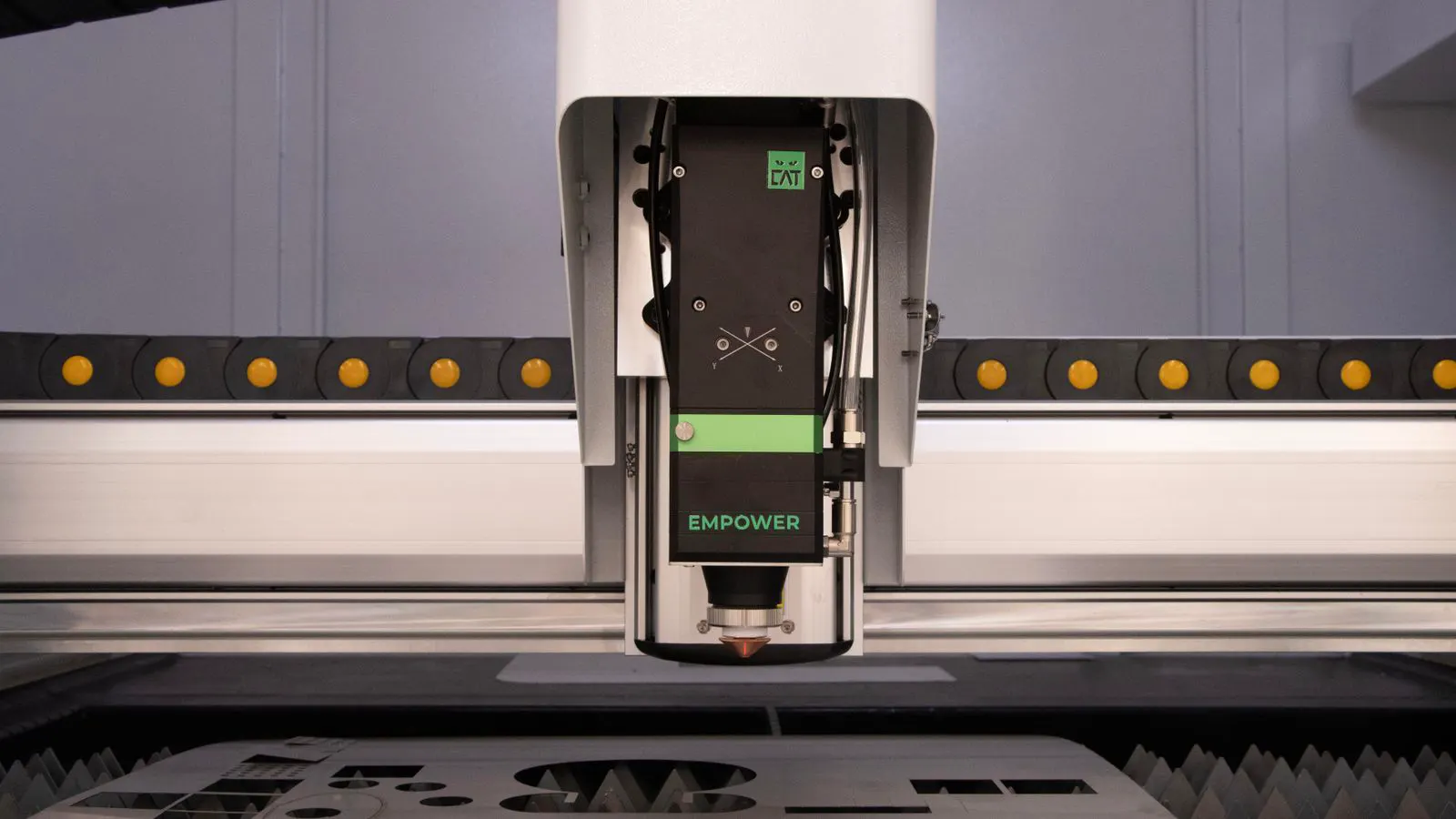
Laser cutting is often the first option engineers evaluate for non-conductive sheet metals. The process uses a focused beam to melt or vaporize the material, removing it with an assist gas. For materials like aluminum, stainless steel, and copper, a CO2 or fiber laser can process stock at high speed. The primary advantage is throughput. On thinner sheets, laser cutting frequently outpaces waterjet by a significant margin.
The edge quality from a laser cut is generally acceptable for many mechanical applications. A well-tuned laser produces a smooth surface with a slight bevel on the top edge due to the angle of the beam. The heat-affected zone, or HAZ, is usually narrow. For non-ferrous metals, the discoloration from the laser is minimal. Engineers often select laser cutting when the part does not require a mirror-like finish and when production volume is high.
However, laser cutting has limitations with non-conductive materials. Reflective metals like aluminum and copper absorb less energy from a CO2 laser. This reduces cut quality and increases the risk of dross. Fiber lasers handle reflective materials better, but the cost of the equipment and the service contracts are higher. If the part is critical and the material is reflective, a fiber laser is often the better choice than a CO2 laser.
When to Choose Waterjet Cutting for Non-Conductive Sheet Metal
Waterjet cutting is a mechanical process that uses a high-pressure stream of water, often mixed with abrasive particles like garnet, to slice through the material. There is no heat involved in the cutting process. The water stream erodes the material away from the beam. This makes waterjet an excellent option for materials that are sensitive to heat.
The edge quality from a waterjet cut is often superior to laser cutting. The cut is a clean, mechanical removal of material. There is no melt pool and no HAZ. This is particularly important for aluminum alloys, titanium, and other materials where heat distortion or oxidation can change the material properties. The edge from a waterjet cut is smooth and free of burrs on the bottom surface.
The primary drawback of waterjet is speed. It is slower than laser cutting, especially on thin stock. The abrasive stream wears down over time, requiring regular replacement of the nozzle and pump parts. This increases the cost per part. For high-volume production of thin sheets, the labor and machine time required to cut parts with waterjet can make the process less economical.
Comparison of Laser and Waterjet for Non-Conductive Materials
The table below summarizes the key differences between laser and waterjet cutting for non-conductive sheet metals.
| Option | Best for | Limitations |
|---|---|---|
| Laser Cutting | High-speed production of thin to medium stock; reflective metals with fiber lasers | Heat-affected zone; discoloration on some alloys; lower quality on thick stock |
| Waterjet Cutting | Thick stock; heat-sensitive alloys; superior edge quality | Slower; higher operating costs; abrasive wear |
| Fiber Laser | Reflective non-conductive metals (copper, aluminum) | Higher capital cost; still produces a HAZ |
| CO2 Laser | Standard non-conductive metals (stainless, mild) | Poor absorption on reflective metals; lower speed on thick stock |
| Abrasive Waterjet | Thick plates; complex shapes; no heat | Slower; higher consumable costs; not ideal for very thin sheet |
Impact of Material Thickness on Cutting Choice
Material thickness is a major factor in the decision. For non-conductive sheet metal, laser cutting is highly efficient on stock from 0.5 mm to 5 mm. Within this range, the speed advantage of the laser is significant. As the thickness increases, the laser beam loses focus and the cut quality degrades. Dross on the bottom surface becomes more common. The assist gas must be increased, which can cause more oxidation.
Waterjet cutting maintains consistent quality as the material gets thicker. It can handle stock from 10 mm to 50 mm and beyond. The cut width is wider than a laser cut, but the edge remains clean. For a 10 mm plate, waterjet may be the only practical option if a clean edge is required. For a 3 mm plate, laser cutting is usually faster and cheaper.
Engineers should consider the stacking height of the parts. If the parts are thin, the laser can process many layers in a single run. Waterjet may require more passes or longer cutting times, which increases the risk of thermal stress if the material is not clamped properly. The cost per part is often lower for laser cutting on thin stock, but the lead time may be shorter for waterjet on thick stock.
Edge Quality and Surface Finish Requirements
Edge quality is a common concern for non-conductive sheet metals. Laser cutting produces a surface that is generally smooth but may have a slight taper. The HAZ can cause discoloration or oxidation, depending on the material. For stainless steel, the discoloration is usually minimal. For aluminum, the surface may darken. This is often acceptable for painted or coated parts.
Waterjet cutting produces a mechanical cut. The edge is flat and free of heat damage. The surface finish is usually better than laser cutting. There is no oxidation or discoloration from the heat. This is critical for parts that require a high surface finish, such as aerospace components or medical devices. The edge from a waterjet cut is also less likely to require deburring.
The required edge quality depends on the application. If the part will be ground or machined, the edge quality from a laser cut is usually sufficient. If the part will be used as-is, a waterjet cut may be required. Engineers should specify the acceptable edge roughness and surface finish in the drawing. This helps the fabricator choose the right process.
Cost and Lead Time Considerations
The cost of laser cutting is typically lower than waterjet cutting for thin stock. The speed of the laser allows for higher throughput. The machine time is shorter, and the labor cost is lower. The consumable costs for laser cutting are low. The primary cost is the machine time and the operator’s time.
Waterjet cutting has higher operating costs. The abrasive media, nozzles, and pumps wear out regularly. The water and electricity consumption are also higher. The machine time is longer, which increases the labor cost. For thin stock, the cost per part can be significantly higher than laser cutting. For thick stock, the cost difference narrows because laser cutting becomes less efficient.
Lead time is another factor. Laser cutting can be set up quickly for small batches. Waterjet cutting may require more time to adjust the pressure and flow. For high-volume production, laser cutting can reduce the lead time. For one-off or small-batch jobs, the difference in lead time is often minimal.
Final Decision Factors for Engineers
When choosing between laser and waterjet for non-conductive sheet metal, engineers should consider the material thickness, the required edge quality, and the production volume. For thin stock with standard edge quality requirements, laser cutting is usually the better choice. For thick stock or heat-sensitive materials, waterjet cutting is often preferred.
The specific alloy also matters. Reflective metals like copper and aluminum may require a fiber laser or waterjet. Standard stainless steel can be cut with a CO2 laser or a waterjet. The part geometry and nesting efficiency also influence the cost. Complex shapes may take longer to cut with waterjet due to the wider cut width. Simple shapes can be nested more efficiently with laser cutting.
Engineers should request samples from the fabricator. A test cut can reveal the actual edge quality and surface finish. This is especially important for critical applications. By understanding the trade-offs, engineers can make an informed decision that balances cost, quality, and lead time.
Frequently asked questions
Can a CO2 laser cut aluminum?
Yes, but CO2 lasers have lower absorption on reflective metals like aluminum. The cut quality may be poor, and the assist gas consumption is higher. A fiber laser is often a better choice for aluminum.
Does waterjet cutting produce a heat-affected zone?
No. Waterjet cutting is a mechanical process that uses a high-pressure stream of water. There is no heat involved, so there is no heat-affected zone.
Which process is faster for thin sheet metal?
Laser cutting is generally faster for thin sheet metal. The speed advantage is significant on stock under 5 mm. Waterjet cutting is slower but produces a cleaner edge.
Can waterjet cut non-conductive materials?
Yes. Waterjet cutting can cut any material, including non-conductive metals like aluminum, titanium, and copper. The abrasive stream erodes the material, so the electrical conductivity of the material does not affect the process.
What is the best process for thick non-conductive sheet metal?
Waterjet cutting is usually the best option for thick non-conductive sheet metal. It maintains a clean edge and avoids heat distortion, which is critical for thick stock. Laser cutting can struggle with thick plates due to beam focus and dross.