Laser cutting sheet metal provides tighter tolerances and cleaner edges for thin to medium thickness materials, while plasma cutting handles thicker plate at lower cost. The best choice depends on your specific thickness, precision, and production volume needs.
- Laser cutting sheet metal offers higher precision and cleaner edges, making it ideal for tighter tolerance work.
- Plasma cutting is more economical for thicker materials and less critical tolerance applications.
- Material thickness and type significantly influence which cutting method is most suitable.
- Edge quality and finish requirements should be evaluated before selecting a cutting process.
- Production volume and budget constraints can shift the balance between the two methods.
When selecting a cutting method for flat sheet metal projects, the decision between laser and plasma often comes down to two factors: material thickness and the level of precision required. Both technologies are widely used in modern fabrication shops, but they behave differently depending on the job. Understanding their distinct capabilities helps buyers and engineers specify the right process without overpaying or accepting quality issues.
How Do Laser and Plasma Cutting Methods Differ?
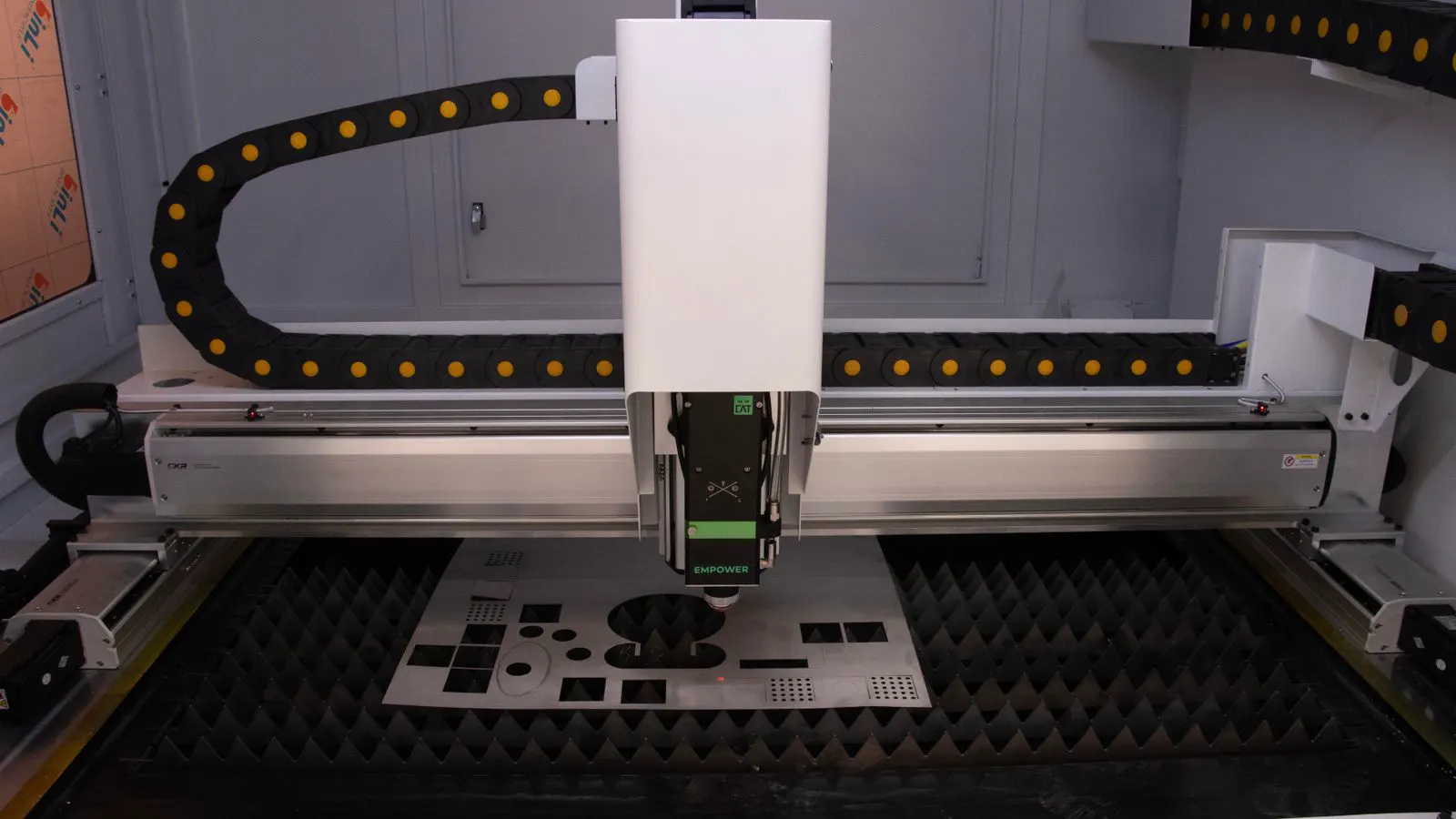
Laser cutting sheet metal uses a high-powered beam to vaporize or melt the material, guiding the cut with an assist gas. The process is highly controlled and allows for very fine, precise cuts. Plasma cutting, by contrast, projects a stream of ionized gas that melts and blows away the metal. While plasma is less precise, it can handle significantly thicker materials and is generally less expensive to operate.
The core difference lies in the cutting mechanism. Lasers create a narrow kerf, usually around 0.1 to 0.5 millimeters for thin sheet. Plasma kerfs are wider, often 1 to 3 millimeters or more, depending on the machine and material. This difference in kerf width directly impacts dimensional accuracy and edge quality.
Which Method Offers Better Tolerances?
Tolerance requirements are usually the deciding factor. Laser cutting sheet metal typically achieves tighter tolerances, often within ±0.1 millimeters for thin materials. This makes laser the preferred choice for components that require precise fit, complex geometries, or clean edges. Plasma cutting generally offers tolerances in the range of ±0.5 to ±1.0 millimeters or more, which may be acceptable for structural parts, enclosures, or applications where edge finish is less critical.
If the part has intricate details, small holes, or requires close-fitting joints, laser is usually the better fit. For larger, simpler shapes where minor dimensional variations are acceptable, plasma can be a more cost-effective option.
How Does Material Thickness Affect the Choice?
Material thickness plays a major role in the decision. Laser cutting sheet metal is highly effective for thin to medium thickness materials, commonly up to 10 to 15 millimeters, depending on the laser power and material type. For thinner sheets, laser provides superior quality and speed.
Plasma cutting excels with thicker plate, often up to 50 millimeters or more. As thickness increases beyond the laser’s practical range, plasma becomes the viable option. However, even within the overlap range, the method chosen will affect edge quality and post-processing needs.
What About Edge Quality and Finish?
Edge quality is another significant consideration. Laser cutting sheet metal produces a clean, smooth edge with minimal burrs, which often reduces the need for deburring or grinding. This is particularly important for parts that will be painted, anodized, or exposed to the user.
Plasma cutting leaves a rougher edge with more burrs and heat-affected zones. The edge is often orange or discolored due to the high heat. For many applications, this is not an issue, but if the part will be visible or require fine finishing, the additional cleanup time and cost must be factored in.
When Should You Choose Plasma Over Laser?
Plasma cutting vs laser is not just about precision. There are several scenarios where plasma is the better choice:
- Thicker Materials: If the sheet metal exceeds 15 millimeters, plasma is often the only practical option.
- Cost Sensitivity: For non-critical parts, the lower equipment and operating costs of plasma can significantly reduce the overall project cost.
- High Volume of Simple Shapes: If producing large quantities of basic shapes without tight tolerances, plasma can be faster and cheaper.
- Rougher Surface Acceptable: For structural brackets, machine frames, or parts where edge finish is not visible or critical, plasma’s rougher edge is acceptable.
When Should You Choose Laser?
Laser cutting sheet metal is the preferred method when precision and finish are paramount. Choose laser for:
- Tight Tolerances: Parts requiring ±0.1 mm accuracy or better.
- Complex Geometries: Intricate designs, small features, or detailed patterns.
- Clean Edges: Applications where minimal post-processing is desired.
- Thin to Medium Thickness: Sheets up to 10-15 mm where laser quality is superior.
- High-Finish Parts: Components that will be painted, anodized, or exposed without additional edge treatment.
Comparison Table: Laser vs Plasma for Sheet Metal
The table below summarizes the key differences between the two methods to help you make an informed decision.
| Option | Best for | Limitations |
|---|---|---|
| Laser Cutting | Tight tolerances, thin to medium sheet, complex shapes, clean edges | Higher cost, limited to thinner materials, slower on thick plate |
| Plasma Cutting | Thick plate, cost-sensitive projects, rougher finish acceptable | Wider kerf, less precise, rougher edges, heat-affected zones |
How to Decide for Your Specific Project
To choose the right method, consider the following questions:
- What is the maximum material thickness? If it exceeds 15 mm, plasma is likely the only option.
- What are the tolerance requirements? If tighter than ±0.5 mm, laser is necessary.
- Is edge finish critical? For visible or high-quality parts, laser’s clean edge saves time and cost.
- What is the production volume? High volumes of simple parts may favor plasma for cost efficiency.
- What is the material type? Some materials, like stainless steel or aluminum, may perform better with one method due to reflectivity or thermal properties.
By evaluating these factors, you can select the cutting method that aligns with your project’s technical and budgetary constraints. Laser cutting sheet metal remains the gold standard for precision, while plasma cutting offers a robust solution for thicker and less critical applications. Understanding their strengths and limitations ensures you get the right process for your specific flat metal jobs.
Frequently asked questions
Can plasma cutting be used for thin sheet metal?
Yes, plasma can cut thin sheet metal, but it will leave a rougher edge and wider kerf compared to laser. For thin materials where precision and finish are important, laser is usually preferred.
What is the maximum thickness a laser can cut?
The maximum thickness depends on the laser power and material type. Typical industrial lasers can cut steel up to 10-15 mm, with some high-power systems reaching 20 mm or more.
Is plasma cutting more expensive than laser cutting?
Generally, plasma cutting is less expensive to operate and requires less capital investment. However, the total cost of ownership depends on production volume, material thickness, and post-processing needs.
Which method is faster for cutting thin sheet metal?
Laser cutting sheet metal is usually faster for thin materials because it requires no pre-heat and has a smaller kerf. Plasma may be faster for thicker plate due to its higher energy input.
Do I need to consider material type when choosing a cutting method?
Yes, material type matters. Reflective materials like aluminum and stainless steel can be challenging for laser, while plasma handles them well. The choice should account for the specific properties of the metal being cut.